All About Municipal Utility Districts (MUD)
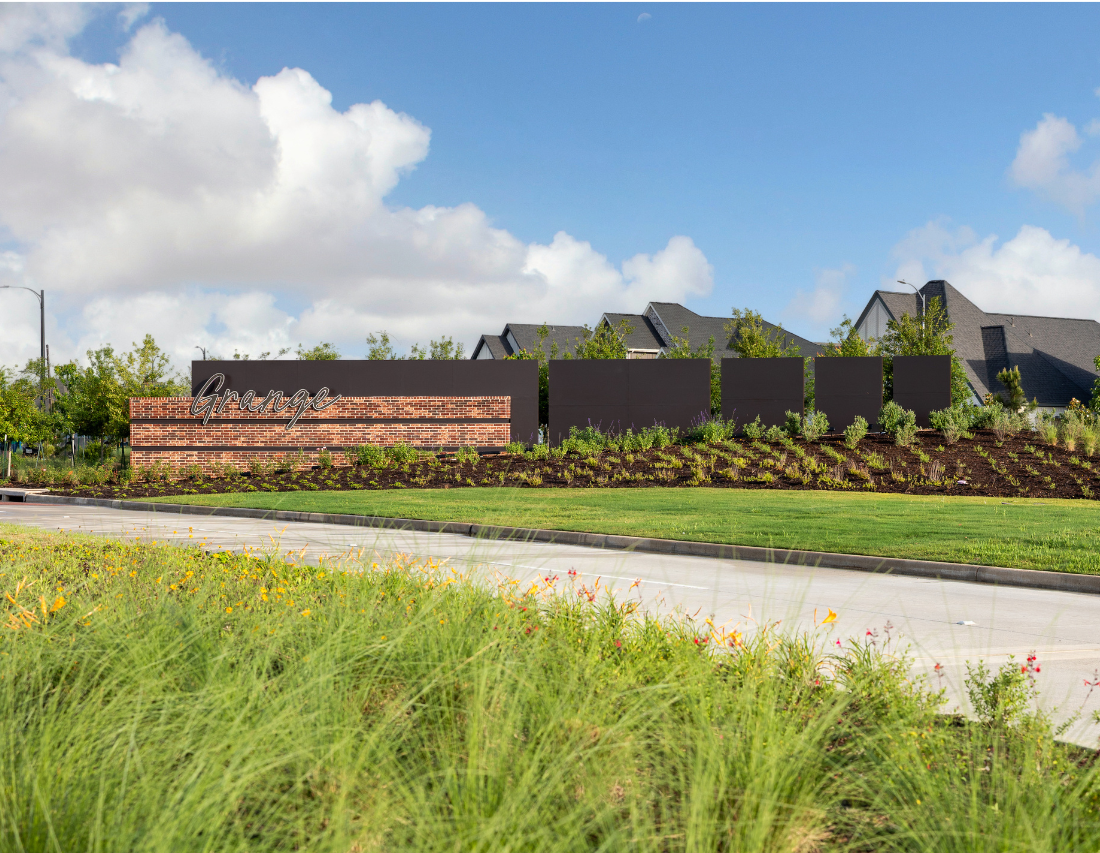
When you picture life in a master-planned community, you may first think of beautiful homes, welcoming streets, trails, parks and places where neighbors can gather. Behind those visible features, however, is another layer of thoughtful planning: the infrastructure that makes everyday life possible.
Water must reach every home. Wastewater must be collected and treated. Rainfall must be managed through a coordinated drainage system. All of these systems must be designed not only for the first residents, but also for the families and businesses that will arrive as the community grows.
In many Texas communities, a municipal utility district—commonly called a MUD—helps make that foundation possible. Understanding the role of municipal utility development can give prospective homebuyers a clearer picture of how a growing community works and what to review before purchasing a home.
What Is a Municipal Utility District?
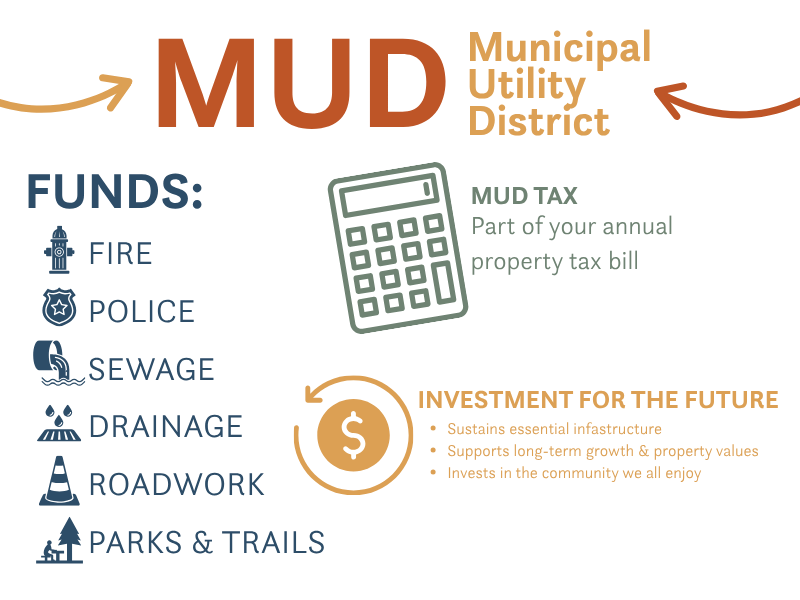
A municipal utility district is a political subdivision of the State of Texas created to provide specified services within a defined area. According to the Texas Commission on Environmental Quality, or TCEQ, MUD services commonly include water, wastewater and drainage. Depending on its legal authority and local circumstances, a district may also provide other services, such as irrigation, solid-waste collection, firefighting or recreational facilities.
MUDs are especially common in growing areas outside an established city utility network. A MUD can create a public framework for financing, building, operating and maintaining the infrastructure that new neighborhoods require.
A MUD is not the same as a homeowners association. An HOA generally administers private deed restrictions and maintains designated community property or amenities. A MUD is a governmental entity with a board of directors, public responsibilities and powers established under Texas law. A property may be located within both an HOA and a MUD, and each has a different role.
Why Master-Planned Communities Use MUDs
A master-planned community develops in carefully sequenced phases. Roads, homes, drainage, utilities and amenities must work together across a much larger plan. Municipal utility development helps coordinate essential systems from the beginning.
Reliable water and wastewater service
Every neighborhood needs dependable access to drinking water and an effective way to collect and manage wastewater. Planning these systems at the district level allows infrastructure to be sized and extended in step with community growth.
Coordinated drainage planning
Drainage is a major component of development in the Houston region. Detention facilities, storm sewers, channels and grading must be planned together to manage stormwater in accordance with applicable regulations and approved engineering criteria.
Drainage planning may be less visible than a model home, but it is an important part of a well-planned neighborhood. No system can eliminate all flood risk, so buyers should still review current flood maps, disclosures, insurance options and property-specific information.
Infrastructure that can grow with the community
A master-planned community may welcome residents over many years. Municipal utility development allows infrastructure to be constructed in stages as neighborhoods come online, aligning investment with growth while planning early sections in relation to what follows.
Public oversight and ongoing operations
Texas MUDs are governed by boards of directors. Their activities are subject to laws applicable to public entities, while TCEQ retains general supervisory authority over water districts. Day-to-day decisions, including operations and certain financial matters, are the responsibility of the individual district and its board.
The district continues operating beyond initial construction. Residents can find contact and board information through district records and TCEQ’s Water Districts Map Viewer.
How MUD Infrastructure Is Financed
Building water, wastewater and drainage infrastructure requires substantial upfront investment. In a typical MUD model, a developer may initially fund eligible infrastructure. Subject to regulatory review, legal requirements and district approval, a district may later issue bonds to reimburse eligible costs.
Those bonds are generally repaid through district revenue, which may include property taxes. A district may also charge utility rates and fees. The exact structure varies.
For a prospective buyer, the key point is straightforward: a home within a MUD may be subject to a MUD property-tax rate in addition to taxes imposed by other local taxing entities. That is why buyers should evaluate the total estimated property-tax obligation, not simply one rate in isolation.
Tax rates, assessed values, exemptions, utility rates, fees and bond obligations can change. Buyers should request the current statutory district notice and tax information for the specific property they are considering, then review those materials with their real estate professional, lender, title company and tax adviser as appropriate.
What Municipal Utility Development Means for Grange Homebuyers
Grange is a 1,130-acre master-planned community in Katy, Texas, designed around a small-town-inspired sense of connection. The community is planned for approximately 2,400 homesites, with trails, water features and natural landscapes woven throughout the plan. Ricestead, Grange’s 20-acre amenity district, is envisioned as a central destination for recreation, wellness and gathering.
A community at this scale requires more than a collection of individual improvements. Utility and drainage systems must be considered alongside homes, roads, public spaces and future development. Municipal utility development is part of the behind-the-scenes framework that can support that coordinated growth.
For prospective residents, this matters in practical ways:
- Essential services are planned as part of the community’s development. Water, wastewater and drainage are fundamental parts of making new neighborhoods ready for residents.
- Infrastructure can be delivered in phases. As Grange grows, additional sections can be served through planned extensions and improvements, subject to approvals and construction schedules.
- The district has an ongoing role. Utility infrastructure must be operated, maintained and financed after initial construction is complete.
- Costs should be understood before closing. Buyers should review all applicable tax rates, utility charges, district notices and HOA assessments for the specific home—not rely on general estimates for the broader area.
Frequently Asked Questions About MUDs and Master-Planned Communities
Is a MUD the same as a city?
No. A MUD is a special-purpose political subdivision with defined boundaries and authorized functions. It does not provide every service associated with a city.
Is a MUD the same as an HOA?
No. A MUD is a governmental entity that may provide water, wastewater, drainage and other authorized services. An HOA is generally a private association that administers deed restrictions and maintains specified community property or amenities.
Do homeowners in a MUD pay additional property taxes?
A MUD may levy property taxes within its boundaries. Those taxes can appear alongside taxes from a county, school district and other applicable taxing entities. The total varies by property and can change over time, so buyers should verify current figures for the exact address.
Can a MUD tax rate change?
Yes. District tax rates may change based on debt-service and operating needs, property values and decisions made through the applicable public process. Past or current rates do not guarantee future rates.
 |